What a Neuro-Ophthalmologist actually does to benefit patients.
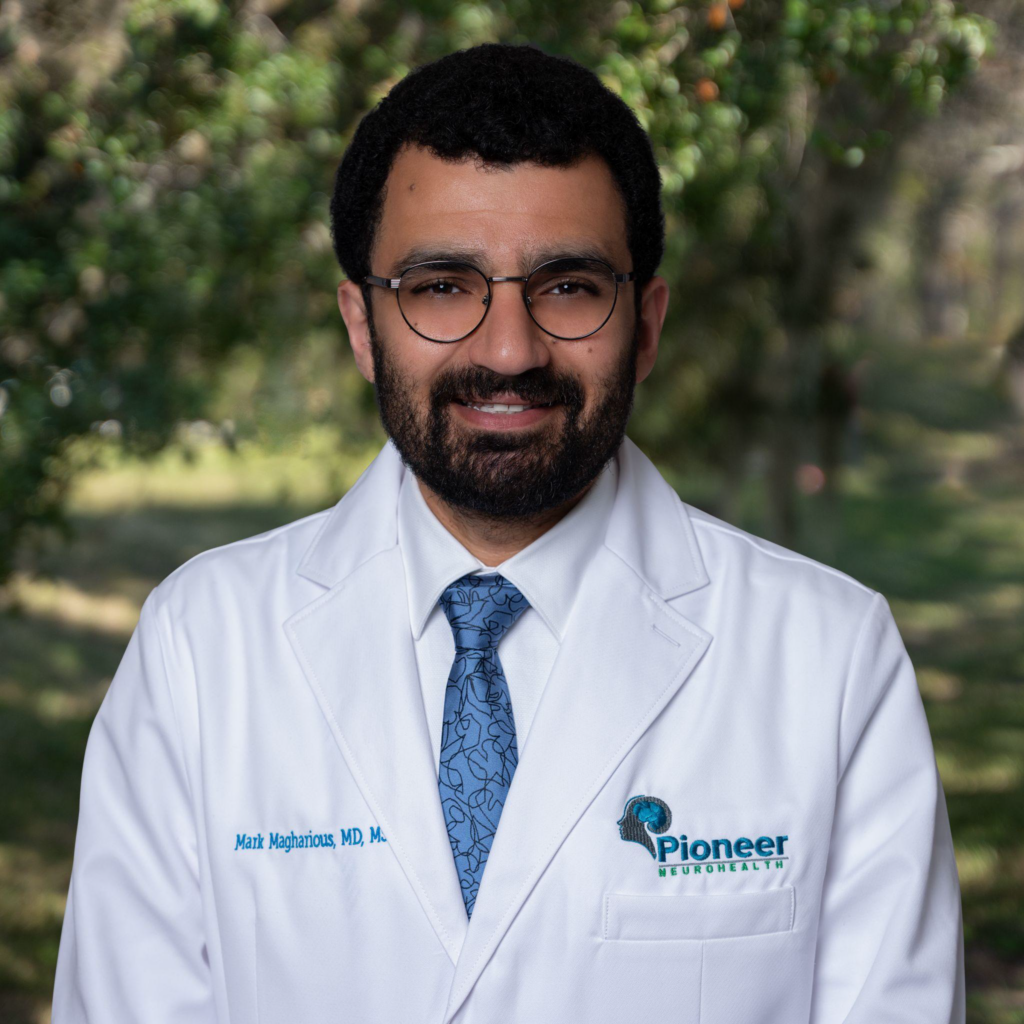
By Dr. Mark Magharious, M.D., M.Sc. Neuro-Opthalmologist, Pioneer NeuroHealth
When people hear the term eye doctor, they usually think of glasses, contact lenses, or cataracts. That’s not what I do.
I’m a neuro-ophthalmologist.
In simple terms, I work at the back of the eye, where vision connects to the nerves and the brain.
My job isn’t to help people see more clearly with lenses. It’s to help people understand and protect their vision when the problem isn’t in the eye itself, but in the nervous system behind it.
That distinction matters more than most people realize.
When a Vision Problem Isn’t an Eye Problem
Vision is often thought of as something that happens in the eye. While the eye is the camera, the brain is the processor.
Once visual information leaves the eye, it travels through a complex network of nerves and brain pathways. Problems anywhere along that route can affect how you see, even when the eye itself appears normal.
That’s where neuro-ophthalmology comes in.
The patients I see are experiencing symptoms such as sudden or unexplained vision loss, double vision, or visual field changes. I also work with patients who are experiencing vision problems following a stroke or other neurological events.
In many of these cases, the issue isn’t related to the lens, retina, or eye muscles.
It’s related to how the brain and nerves are handling visual information.
What Makes Neuro-Ophthalmology Different
I’m not an ophthalmologist who prescribes glasses, and I’m not an optometrist who checks refraction. I don’t treat cataracts or retinal disease.
My work focuses on three vitally important biological structures, the optic nerves at the back of the eye, the brain, and the neurological pathways responsible for vision.
In many ways, neuro-ophthalmology sits at the intersection of neurology and vision.
That overlap is also what makes it challenging and often misunderstood.
Patients frequently arrive frustrated.
They’ve seen multiple providers, had tests that “look normal,” and still don’t have answers.
My role is to determine whether the visual problem originates from the nervous system and, if so, what can be done next.
Sometimes the Goal Is Preservation, Not a Cure
There’s something important I tell patients early on: Neuro-ophthalmology isn’t always about fixing a problem.
Often, it’s about preserving what’s left.
In an ideal world, no one would ever need to see someone like me.
Many of the conditions I manage involve damage that medicine can’t fully reverse. In those cases, the focus shifts to preventing further decline, protecting function, and helping patients adapt.
That may not sound dramatic, but preserving vision, even partially, can make a profound difference in someone’s independence and quality of life.
When Should Someone See a Neuro-Ophthalmologist?
Most of the patients I see are referred to me by other medical professionals. Many are referred by a neurologist, ophthalmologist, or primary care provider for specialized evaluation.
This typically happens when the patient’s doctor finds that:
- Vision changes don’t match typical eye disease
- Symptoms suggest a neurological cause
- There’s concern about the brain or optic nerves
- Other evaluations haven’t provided clear answers
Seeing the right specialist matters. It saves time, reduces unnecessary testing, and helps avoid frustration and expense.
These are things I care deeply about. I never want a patient to feel like their time or resources were wasted.
The healthcare professionals at Pioneer NeuroHealth share this value. That’s why I decided to join this practice.
Vision problems can be frightening, especially when answers aren’t clear.
My goal is always to help patients understand what’s happening, why it’s happening, and what can realistically be done to protect their vision going forward.
I work at the back of the eye, where vision meets the brain. And when patients need someone to navigate that complex space with them, I want them to know they’re not alone, and that they’re in good hands.
Share This Post
About the Author
Mark Magharious, MD, M.Sc. is a neurologist and a fellowship-trained neuro-ophthalmologist with Pioneer NeuroHealth based in Tampa, Florida. He has specialized training in the diagnosis and management of a wide range of neuro-ophthalmologic and neurologic conditions. He uses a patient-centered, education-focused approach to ensure patients understand their diagnosis, test results, and treatment options. In addition to English, he speaks French and Arabic.
Mark Magharious, MD, M.Sc.
Neuro-Opthalmologist at Pioneer NeuroHealth